
The River Arts District Artists (RADA) is a vibrant organization dedicated to promoting the common interests and well-being of over 750 artists who call Asheville’s historic warehouse district — the River Arts District (RAD) — home. Committed to diversity, innovation and positive expression, RADA supports individual creative businesses while fostering a safe, discrimination-free environment where artists can thrive.
Through their nonprofit, the RADA Foundation, the organization advances the arts in the RAD by providing progressive services for both professional and emerging artists. This foundation is guided by three core programs: scholarships, space and support for RADA’s organizational operations.
“We have members that have been here since the beginning, when these were just abandoned buildings that artists started taking over and inhabiting and living and working in,” said Jeffrey Burroughs, president of RADA. The district’s rich 30-year history began with the first Studio Stroll, now a beloved tradition that continues with the Second Saturday Art Strolls.
This tightly knit artistic community faced an unprecedented challenge when Hurricane Helene tore through the RAD in September 2024. The waters didn’t discriminate between galleries, studios and the artwork within them. Nearly 80 percent of the district’s buildings were damaged, with the “lower RAD” closest to the river bearing the brunt of the destruction.
“We had over 300 displaced artists, collectives and galleries,” Burroughs said. Following the storm, hundreds of volunteers worked tirelessly, gutting buildings down to the studs. By mid-December 2024, Aurora Arts at 375 Depot Street became the first devastated building to reopen after taking six feet of water on its first floor.
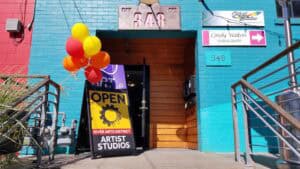
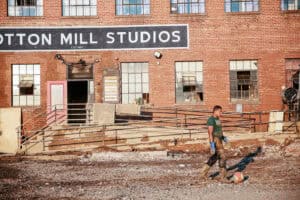
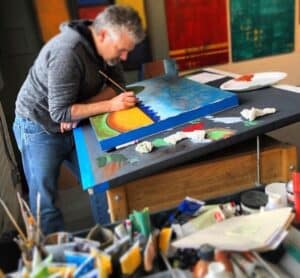
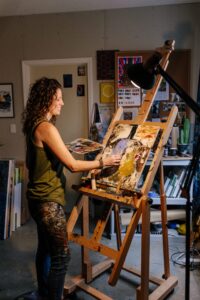
“Now the entire upper RAD — Depot Street, Clingman Avenue, Roberts Street and Artful Way — is completely reopened and ready to receive visitors,” Jeffrey says. “Many have adopted displaced artists of the RAD.”
This spirit of community defines RADA’s approach to recovery. Their inaugural RADfest in November 2024 brought over 10,000 visitors to the district, generating more than $1 million in art sales when artists needed it most. “It was the lifeline that many needed to try to hold on,” said Burroughs.
Most recently, RADA opened an “outpost” at 24 North Lexington in Downtown Asheville. The space, donated by the Radical Hotel, provides displaced artists with a place to showcase and sell their work.
The RADA Foundation has already distributed more than 500 emergency relief grants to artists impacted by the flooding, regardless of membership status. Phase 2 will target artists currently open or trying to reopen in the district.
While the lower RAD continues its recovery with a target reopening date of summer 2025, RADA is also considering the district’s long-term future through the newly created United River Arts District (URAD), bringing together artists, building owners, developers and government representatives to advocate for thoughtful development.
“The greatest way to help any artist within the RAD is, first, if you can come and visit Asheville, do so,” Burroughs added. “Come down, bring hugs, bring your wallet or purse, and support the artists .”
For those who can’t visit in person, Burroughs suggested browsing the artist directory at RiverArtsDistrict.com to connect directly with creators or donate to the RADA Foundation.